
Digital Product Passport software for retail
A Digital Product Passport (DPP) is a digital record of a product's origin, materials, sustainability claims, and end-of-life pathways — accessible by scanning a QR code on the product or its hang tag. The EU's ESPR and Green Claims Directive will require DPPs for textiles, electronics, and consumer packaged goods sold in major markets, with phased rollouts beginning in 2027.
SIX is the customer-facing experience layer that turns DPP data into a brand moment. Each scan opens a curated Six — combining required compliance information with the content that makes a scan worth doing: product education, brand stories, care guides, related products, and calls-to-action. The data behind it can come from your existing DPP system, or live directly in SIX.
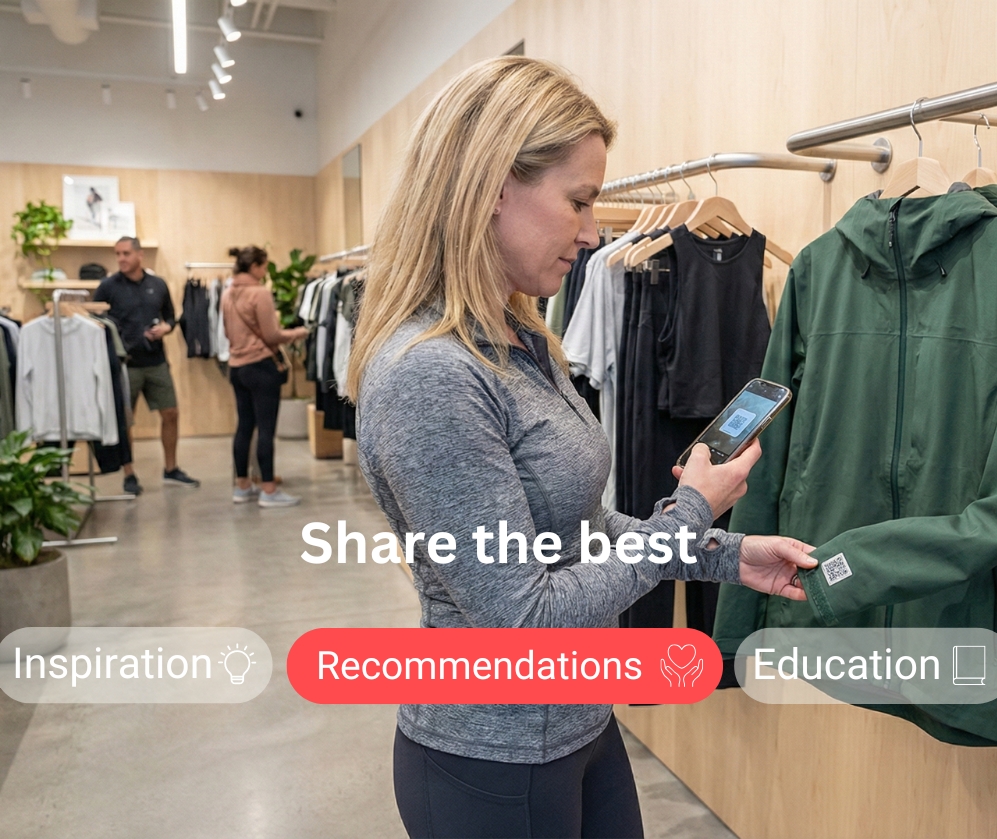
Compliance reimagined as customer experience
A scan should deliver more than data — it should deliver an experience. When a customer scans a SIX-powered hang tag, they don't see a list of data. They enter a curated, branded experience that builds the customer relationship.
Beyond the basic label
SIX presents required DPP data — origin, composition, carbon footprint, recyclability — through an engaging, branded interface. Compliance becomes a customer experience, not a regulatory burden.
- Curated visual format: Each Six is a curated, visual collection — replacing cryptic icons, dense data tables, and PDF dumps with a polished mobile experience.
- Actionable circularity: Direct customers to your repair services, care guides, take-back programs, or trade-in platforms with a single tap.
- Rich media: Replace cryptic care symbols with video tutorials, ambassador stories, and product education that extends the life of every item.
Built for ongoing management
SIX is designed to launch quickly and stay current — no multi-year platform rollout, no reprinting hang tags every time a regulation changes.
- Centralized customer-facing content: Whether SIX integrates with your existing DPP system or houses the data directly, all customer-facing content lives in one platform. Connects to your existing PLM (Product Lifecycle Management), ERP, and supply chain systems for source data.
- Dynamic updates: Update compliance certificates, care instructions, or brand content digitally — the QR code stays the same; the experience evolves.
- Built on global standards: SIX is designed to support GS1 Digital Link so your DPP data is machine-readable by regulators, retailers, and recyclers worldwide.
Pilot quickly and expand
You don't need a multi-year IT project to launch a Digital Product Passport. SIX is designed for speed and scalability.
- Start with a hero collection: Launch a pilot collection in weeks, gather customer engagement data, then scale across your SKUs.
- Low-lift integration: SIX maps to your current systems — minimizing the burden on your IT team and operations.
- Built to scale: Move from a pilot collection to your full portfolio — across product lines, regions, and seasons — using a shared library of reusable content components.
Deployment model: SIX works with your existing DPP infrastructure, or houses your DPP data directly. For enterprise brands with established DPP, PLM, and supply chain systems, SIX integrates and adds the customer experience layer on top. For mid-market brands building DPP capability for the first time, SIX can house your DPP data directly — one platform for both the data foundation and the customer experience.This full capability is in active development → get in touch to build the SIX hang tag solution with us.
Built for the industries with DPP requirements
SIX serves the consumer-facing product categories most affected by emerging Digital Product Passport regulations — where compliance, customer trust, and brand experience all converge on the hang tag.
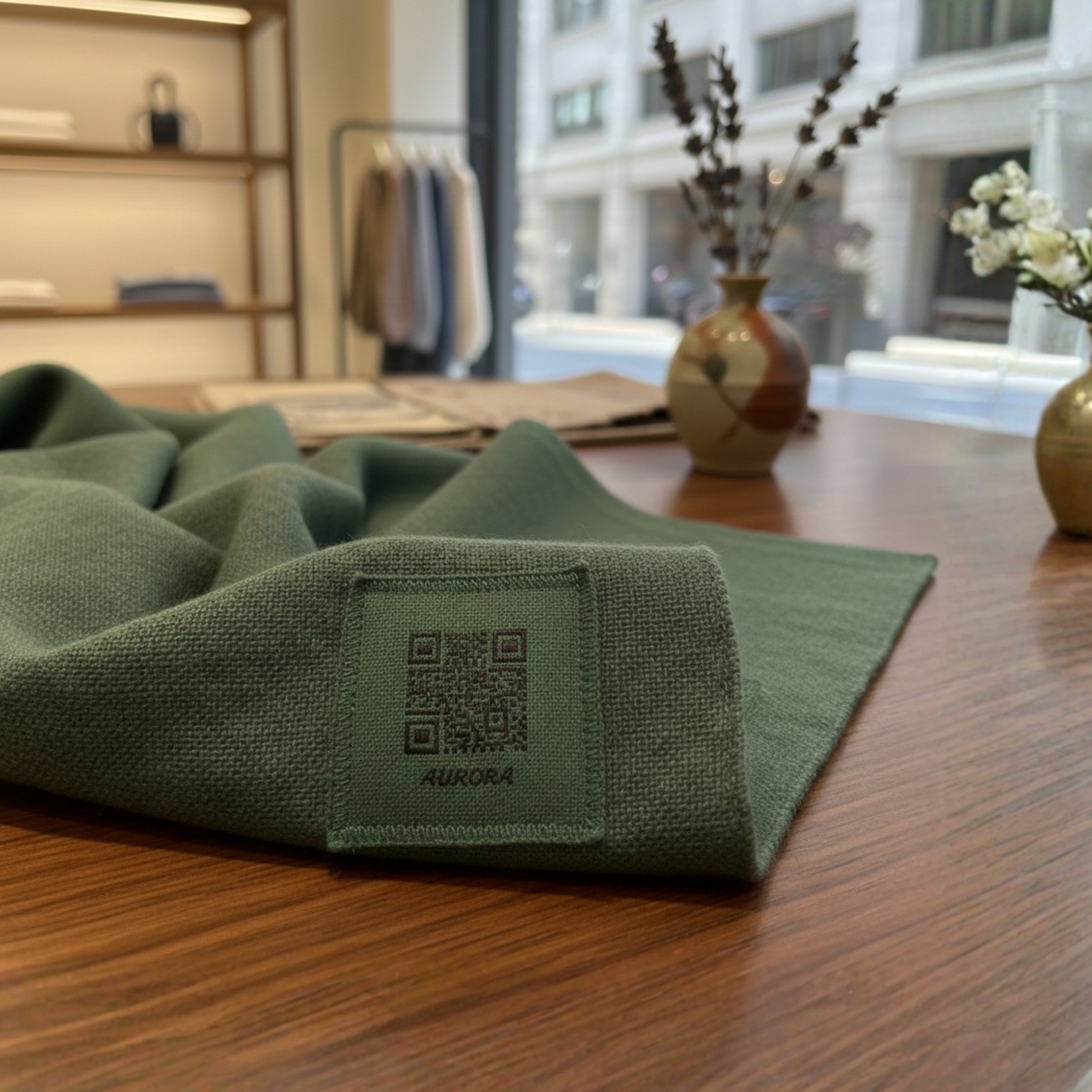
Textiles & Apparel
The fashion and apparel industry is the primary target of the EU ESPR rollout, with PFAS restrictions and traceability requirements driving the first wave of DPP adoption.
- Material transparency: Display fiber composition, chemical safety status (PFAS-free, REACH-compliant), and certifications in a customer-facing format.
- Supply chain visibility: Show your supply chain from Tier 1 assembly to Tier 4 raw material extraction — turning provenance into a brand story.
- Resale and authentication: Verify item authenticity for peer-to-peer resale and trade-in programs — protecting brand equity in the secondary market and extending product lifecycles.
- Care and longevity: Replace cryptic care symbols with video tutorials, repair guides, and brand-specific styling advice that extends garment life.

Consumer Packaged Goods (CPG)
Packaging space is limited; consumer demand for transparency is infinite. SIX gives CPG brands the room to tell the full product story.
- Deep disclosure:Share detailed ingredient sourcing, allergen profiles, and nutritional depth that won't fit on the physical package.
- Smart recycling:Provide localized disposal and recycling instructions based on the customer's region — ensuring packaging actually gets recycled.
- Brand storytelling: Use the scan as an entry point to product origin stories, sustainability commitments, and ongoing brand campaigns.
- Repeat purchase: Drive customers from one product to your full portfolio with curated related products, recipes, and pairings.

Beauty & Personal Care
Beauty brands face rising pressure on ingredient transparency, sustainability claims, and material disclosure — from regulators and from consumers.
- Ingredient transparency: Display full INCI lists, sourcing details, and certifications (cruelty-free, vegan, organic, clean) in a customer-friendly format.
- Sustainability claims with proof: Back up green claims with documented sourcing, carbon footprint data, and third-party certifications.
- Routine guidance: Embed application tutorials, usage videos, and product pairings as part of the hang-tag experience.
- Refill and return programs: Link customers to refill stations, take-back programs, and authorized resale channels.
A SIX hang tag in practice
Scan the QR code to open a working example — DPP-compliant data presented as a curated customer experience.
What's inside a hang tag Six
Each hang-tag Six combines required DPP data with the brand content that makes a scan worth doing. A single Six contains six Picks — and each Pick is its own content card.
- Compliance data: Provenance, materials, sustainability claims, end-of-life pathways.
- Care guidance: Wash instructions, repair resources, longevity tips.
- Brand story: Origin, makers, sustainability commitments.
- Related products: Curated cross-product recommendations.
- Action paths: Repair, resell, refill, or warranty registration.
- Customer support: Direct line to brand customer service.
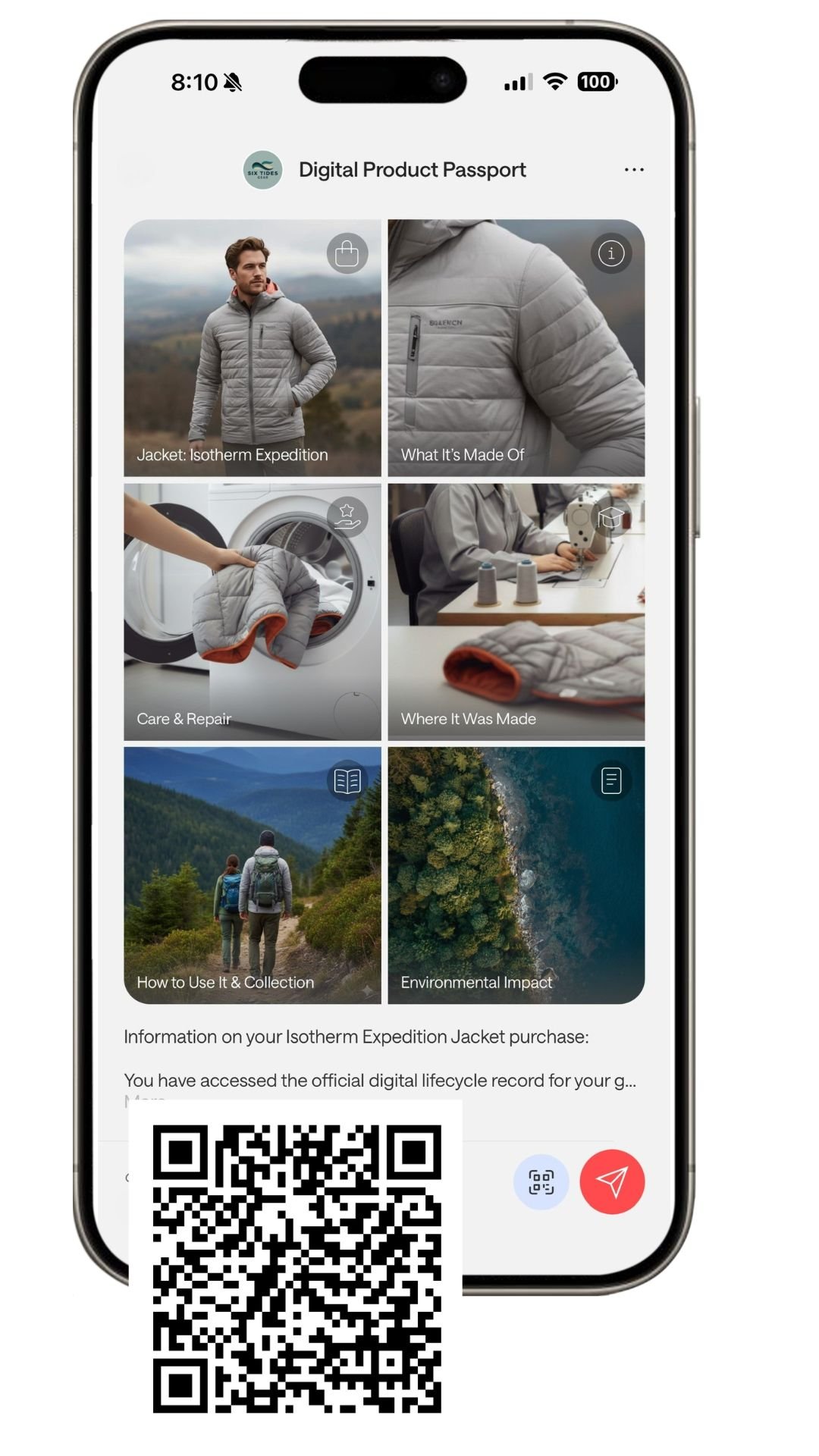
Scan to open a live example Six — a curated, mobile-first hang-tag experience.
Frequently asked questions
What is a Digital Product Passport (DPP)?
A Digital Product Passport (DPP) is a digital record of a product's origin, materials, sustainability claims, supply chain journey, and end-of-life pathways — accessible by scanning a QR code on the product or its hang tag. DPPs are designed to give regulators, retailers, recyclers, and consumers verifiable, machine-readable access to product information across the full product lifecycle. The European Union is leading global DPP adoption through the Ecodesign for Sustainable Products Regulation (ESPR), with phased rollouts beginning in 2027.
What information does a Digital Product Passport typically include?
A Digital Product Passport typically includes product origin (where it was made and by whom), material composition (fiber, ingredients, or component breakdown), sustainability data (carbon footprint, recyclability, certifications), supply chain traceability (Tier 1 to Tier 4 suppliers), and end-of-life pathways (recycling, repair, take-back, resale). With SIX, the DPP also includes brand content — care guides, product education, brand stories, and calls-to-action — that turns each hang-tag scan into a complete customer experience.
Does SIX replace my existing DPP system?
No — SIX is designed to work alongside your existing DPP system. SIX pulls in your DPP data and presents it as a curated customer experience. Your DPP system remains the source of truth for compliance and regulatory data. This makes SIX a faster, lower-risk addition to your existing tech stack than a full DPP platform rollout, while delivering the customer experience your DPP data alone can't.
What systems does SIX integrate with for DPP data?
SIX connects to your existing Product Lifecycle Management (PLM), Enterprise Resource Planning (ERP), and supply chain management systems to pull in product data for your DPP. SIX also integrates with established DPP platforms via standard APIs, so your existing DPP investment becomes immediately customer-facing through SIX. The platform is designed to be ecosystem-friendly — SIX adds the customer experience layer without requiring you to replace what already works.
Does SIX comply with global DPP standards?
Yes. SIX supports GS1 Digital Link — the global standard for product identification and URI structure — so your DPP data is machine-readable by regulators, retailers, and recyclers worldwide. SIX is designed to meet the requirements of the EU Ecodesign for Sustainable Products Regulation (ESPR), the Green Claims Directive, and emerging DPP regulations in other jurisdictions including the UK, US, and Canada.
When does Digital Product Passport compliance take effect?
The EU's Ecodesign for Sustainable Products Regulation (ESPR) was adopted in 2024, with phased DPP requirements rolling out from 2026 onwards. Textiles, electronics, batteries, and select consumer packaged goods are targeted in the first wave. Beauty and personal care, home goods, and additional categories will follow in subsequent phases. Brands that prepare early avoid border delays, build customer trust, and gain competitive advantage in markets where consumers actively choose transparent brands.
Is SIX a Digital Product Passport (DPP) platform?
SIX is the customer-facing experience layer for Digital Product Passports — not a DPP database in the traditional sense. SIX displays DPP data through an engaging, branded interface that turns compliance into a customer experience moment. For brands with an existing DPP system, SIX integrates with that system and presents the data through a curated Six. For brands without an existing DPP system, SIX can house the DPP data directly — serving as both the data foundation and the customer experience.
Can SIX work for mid-market brands without an existing DPP system?
Yes. For brands that don't have an existing DPP platform, SIX can house your DPP data directly — product origin, materials, care instructions, compliance certificates, and supply chain detail — alongside the customer-facing experience. One platform handles both the data foundation and the customer experience, so mid-market brands can launch DPP-compliant hang tags without buying a separate DPP system.
How long does it take to launch a Digital Product Passport with SIX?
SIX is designed for rapid deployment. Most brands launch a pilot collection in weeks, not the months or years required by full DPP platform implementations. Start with a single hero collection to gather customer engagement insights, then scale across your product portfolio. SIX's reusable Pick components mean once you've built the core content blocks (compliance data, care guides, brand stories), they can be applied across hundreds of SKUs efficiently.
What industries does SIX support for hang tags and Digital Product Passports?
SIX serves consumer-facing brands across the categories targeted by ESPR and related regulations: textiles and apparel (the first wave of DPP requirements), consumer packaged goods (CPG), beauty and personal care, electronics and home goods. Any brand selling physical products in markets with DPP requirements can use SIX to deliver compliant, customer-friendly digital product passports — whether they have existing DPP infrastructure or are building DPP capability for the first time.
Get Started
Whether you're preparing for EU ESPR compliance with an existing DPP system, or building DPP capability for the first time, SIX makes the hang tag worth scanning.